

A peppercorn crust for rack of lamb comes down to one method: press coarsely cracked black pepper onto a seared rack, finish it in a hot oven until it hits your target doneness, then rest it 10 minutes before slicing between the bones. The part most recipes skip: pre-ground pepper from a shaker turns dusty and bitter under high heat, so the crust only holds its bite and aroma when the peppercorns are cracked fresh, right before they hit the meat.
- A peppercorn crust rack of lamb needs coarsely cracked pepper pressed on after a hard sear, not before.
- Finish in a 400-425F oven and pull the rack at 130-135F internal for medium-rare.
- Rest 10 minutes before carving or the crust slides off with the juices.
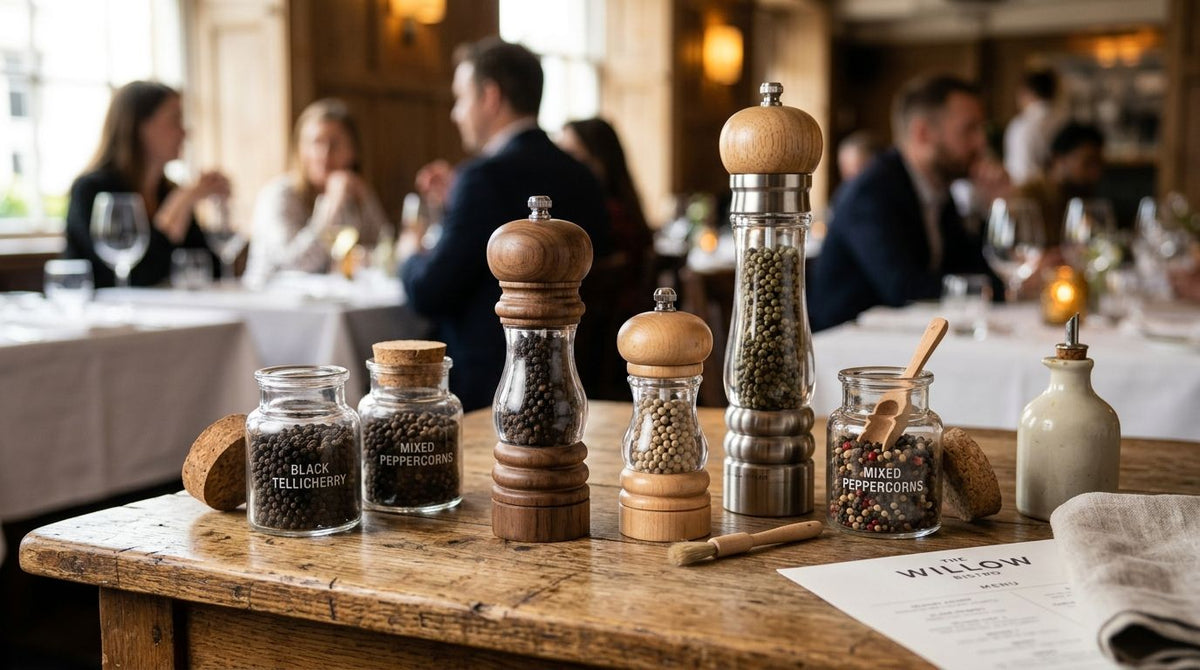
- Fresh-cracked pepper from a mill like PepperMate's traditional pepper mill holds up better under heat than jarred pepper.
Why this matters
Rack of lamb is an expensive cut, and a crust that falls off in the pan wastes both the pepper and the money spent on the meat. Most crust failures in 2026 home kitchens trace back to two mistakes: grinding pepper too fine so it burns instead of toasting, or skipping the sear so the crust never bonds to the surface.
A traditional pepper mill that cracks pepper coarse rather than powder-fine solves the first problem in one step. The second problem is just technique, and it is covered below.
How do you make a peppercorn crust for rack of lamb?
The process has four stages: crack the pepper, sear the rack, press the crust on, then finish in the oven.
- Crack 2 tablespoons of whole black peppercorns coarse, not powder-fine — you want visible fragments, not dust.
- Pat the rack dry and season with salt only; hold the pepper back until after the sear.
- Sear fat-side down in a hot oven-safe pan, 2-3 minutes per side, until the fat renders and the surface browns.
- Brush the seared rack with a thin layer of mustard or oil, then press the cracked pepper into every surface while the meat is still warm.
- Finish in a 400-425F oven for 15-20 minutes, checking with a thermometer rather than a timer.
- Pull the rack at 130-135F for medium-rare, then rest it 10 minutes, tented loosely, before slicing between the bones.
The mustard or oil step matters more than most recipes admit — it is the glue that keeps the crust from sliding off when you carve, not a flavor addition.
Classic cracked pepper crust vs herb-and-pepper crust
| Crust type | Texture | Best for |
|---|---|---|
| Classic cracked pepper | Sharp, coarse bite, visible fragments | Cooks who want pepper to be the dominant flavor — Buy this method if you are new to crusting lamb |
| Herb-and-pepper (rosemary, garlic, pepper) | Softer bite, herbal aroma layered over the pepper | Cooks who already roast lamb with rosemary — Hold for a second attempt once the plain pepper version is dialed in |
Both crusts start from the same cracked pepper base described in the cracked black pepper crust guide. The difference is what gets mixed in before pressing, not the pepper itself.
Why crust results vary from one kitchen to the next
- Grind consistency — pre-ground pepper is uneven and burns in spots; a mill set to coarse gives a uniform crust.
- Pan heat — a pan that is not fully preheated will not sear fast enough to build a crust base before the meat overcooks.
- Fat cap thickness — racks with a thicker fat cap need longer on the fat side before the pepper goes on.
- Oven calibration — an oven running off its dial reading throws off the 15-20 minute finish window; a thermometer removes the guesswork.
- Rest time skipped — carving straight out of the oven pushes juices out and takes the crust with them.
- Peppercorn freshness — pepper left open to air for months loses aromatic oil and cracks softer, giving a duller crust.
How much pepper do you need for one rack of lamb?
Most rack of lamb recipes call for about 2 tablespoons of coarsely cracked pepper per rack of 8 ribs, enough to coat every surface without burying the lamb flavor underneath it. Scale up proportionally for a double rack or a crown roast, and crack it fresh rather than measuring pre-ground pepper, since coarse fragments take up more volume than fine grounds for the same weight.
What internal temperature should rack of lamb hit for medium-rare?
Rack of lamb hits medium-rare at 130-135F internal, checked at the thickest part of the loin away from bone. The USDA's published minimum for whole cuts of lamb is 145F with a 3-minute rest, so cooks going lower are choosing the restaurant-style pink center over that guideline — know the distinction before serving guests who want lamb cooked further.
Whole peppercorns cracked to order are what most chef preparations use, because coarse fragments toast in the oven instead of scorching. A mill that holds whole black peppercorns and cracks them coarse on demand changes the texture of the crust more than any other step in the recipe. PepperMate's traditional pepper mill is built for that coarse setting, which is why a mill like it belongs next to the stove on lamb night rather than a fine-grind grinder.
The same cracked-pepper approach carries over if you are seasoning a prime rib roast with fresh cracked pepper instead of lamb — sear, press, finish, rest, just scaled to a bigger roast and a longer oven window.
“Press coarsely cracked pepper onto a seared rack of lamb, finish it hot, pull it at 130-135F, and rest it 10 minutes. That is the entire method.”
If you are building a dry rub instead of a straight pepper crust, the technique for curing and rubbing meats with cracked pepper applies the same coarse-crack logic across a longer marinating window rather than a same-day sear.
What to serve alongside the rack
A peppercorn crust rack of lamb pairs with the same pan-sauce logic used for steak: deglaze the searing pan, reduce, then pour the sauce around the sliced rack rather than over the crust. Sauce poured on top softens the pepper fragments within a minute or two. Plate it underneath instead.
Salt goes on before the sear, pepper after. That split is the single biggest reason this crust works in 2026 exactly as it did in a classic French kitchen: salt needs contact time with the raw surface, pepper needs protection from direct pan heat.
FAQ
What is the best pepper mill for making a peppercorn crust?
A mill that cracks pepper coarse rather than fine works best for a peppercorn crust rack of lamb, since fine pepper burns under high heat while coarse fragments toast. PepperMate's traditional pepper mill is set up for that coarse crack.
How much pepper do you need for a rack of lamb?
About 2 tablespoons of coarsely cracked pepper covers one rack of 8 ribs. Scale it up proportionally for a double rack or a crown roast.
What temperature should rack of lamb reach for medium-rare?
Rack of lamb reaches medium-rare at 130-135F internal, checked at the thickest part of the loin. The USDA's published minimum for whole lamb cuts is 145F with a 3-minute rest.
Should you use whole peppercorns or pre-ground pepper for a crust?
Whole peppercorns cracked fresh hold their bite and aroma under oven heat. Pre-ground pepper turns dusty and can taste bitter after 15-20 minutes at 400-425F.
How long should rack of lamb rest after roasting?
Rest rack of lamb 10 minutes before carving. Cutting sooner pushes juices out of the meat and takes the pepper crust with them.
Can you make a peppercorn crust without searing first?
You can press pepper on raw and roast straight through, but the crust will not bond as well without a 2-3 minute sear per side first. The sear browns the surface and gives the mustard or oil something to grip.
Is a peppercorn crust better than an herb crust on lamb?
A straight peppercorn crust is sharper and coarser in texture, while a herb-and-pepper crust folds in rosemary or garlic for a softer, more aromatic bite. Both start from the same coarsely cracked pepper base.
How do you keep the pepper crust from falling off when carving?
Brush the seared rack with a thin layer of mustard or oil before pressing the pepper on, then rest the meat 10 minutes. Carving hot lamb is what loosens most crusts.
One last thing
The detail most home cooks miss in 2026 recipe videos: the crust goes on after the sear, not before. Pepper pressed onto raw lamb burns in the pan before the meat even browns, which is why so many home versions come out with a bitter, blackened coating instead of a toasted, fragrant one. Sear first, brush with mustard or oil, then press the pepper on while the surface is still warm and tacky enough to hold it.