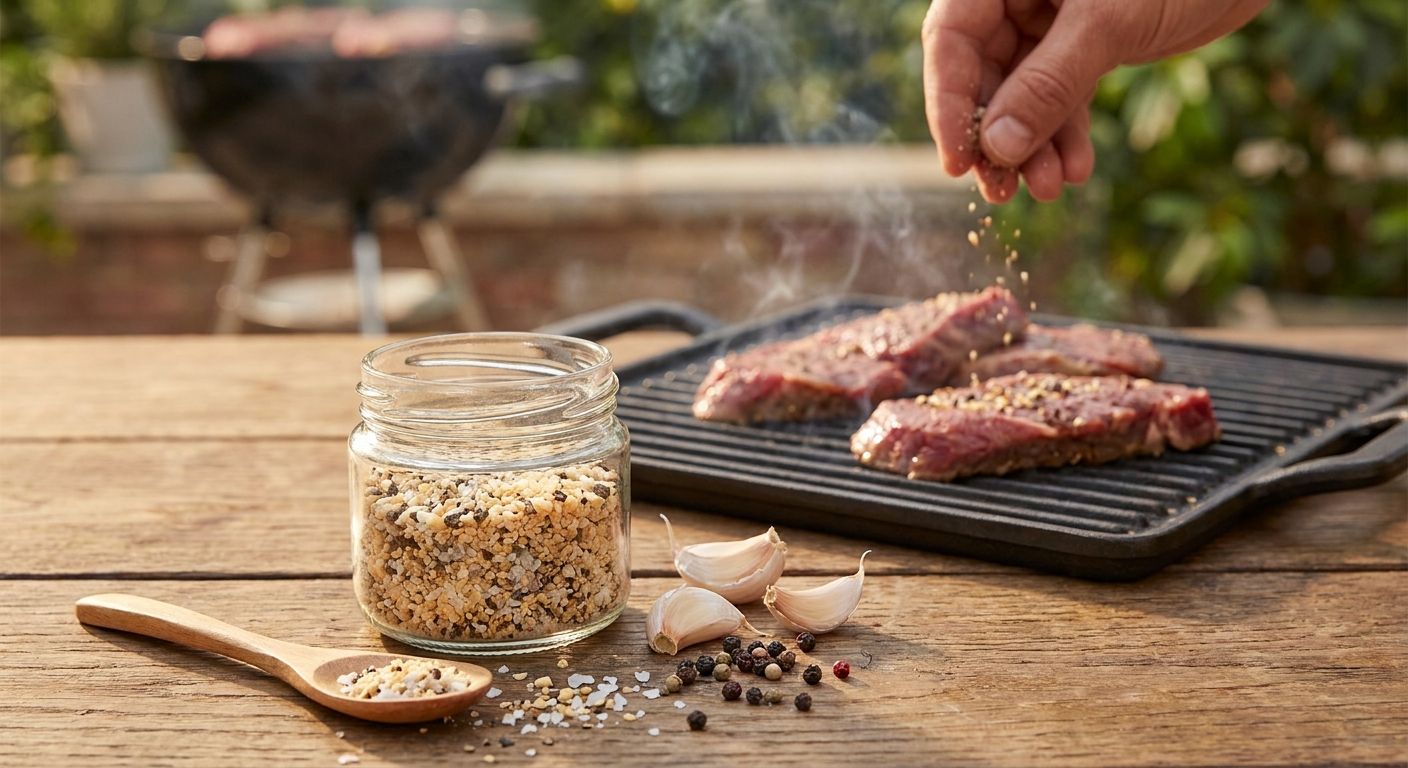


Cracked black pepper is the difference between a steak with a real peppercorn crust and a steak with dust on it. Get the grind size wrong and you either burn the pepper before the sear finishes or watch it slide off onto the pan — this guide tells home cooks and grill owners exactly what to look for and which mill actually delivers the right crack.
- Cracked black pepper for steak needs pieces near 1/8 inch — pre-ground powder scorches before a crust forms.
- PepperMate Traditional Pepper Mill's coarsest setting cracks whole peppercorns to steak-crust size in one turn. Buy.
- Tellicherry-style peppercorns hold flavor better than standard black pepper past 450°F sear heat.
- Apply cracked pepper after the initial sear, not before — raw pepper on hot oil burns in under 90 seconds.
Why this matters
Fine pre-ground pepper is built for the table, not the pan. It's milled small enough that the essential oils that carry pepper's aroma have already started evaporating by the time the container reaches your kitchen, and the powder-fine grind burns almost instantly on a 450°F cast iron surface. Whole peppercorns solve the burning problem but create a new one — they roll right off the meat and skitter across the pan.
Cracked black pepper sits in the middle, and that middle is where a steak crust actually forms. A mill like the PepperMate Traditional Pepper Mill set to its coarsest position produces pieces large enough to bite into and small enough to bind to the surface moisture and rendered fat on the meat. That's the whole game in 2026 as much as it was a decade ago — coarseness control, not the brand of peppercorn, is what makes or breaks a crust.
Who this is for
This guide is for home cooks who reverse-sear or pan-sear steak regularly and want the pepper crust to actually stay on the meat through the cook — not the occasional griller reaching for a shaker of pre-ground pepper. If you're cooking a ribeye or New York strip more than a couple times a month and you've noticed your crust either burns black or falls off in the pan, the fix is almost always grind size, not technique.
What to look for in cracked black pepper for a steak crust
Grind coarseness control
A mill needs a dedicated coarse setting that produces pieces roughly 1/8 inch across — smaller and it behaves like ground pepper, larger and it won't adhere. Most standard pepper shakers and pre-ground jars can't get you there, which is why a mill with a true adjustable mechanism matters more than the peppercorn brand itself. Read the guide to picking a pepper mill if you're still using a shaker.
Peppercorn freshness at the moment of cracking
Ground pepper loses aromatic oils within minutes of milling, which is the entire argument for grinding fresh at the stove rather than buying pre-cracked jars. Cracking peppercorns seconds before the steak hits the pan preserves the sharp, resinous smell that defines a good crust instead of a dull, flat one.
Mechanism durability under repeated grinding
A steak crust takes a real volume of pepper — several full turns per side, not a light dusting. Cheap plastic mills strip out or clog after a few months of that kind of use; a ceramic grinding mechanism holds its edge through years of steak nights.
Piece size and shape for adhesion
Pieces need irregular edges, not round balls, to grip the surface moisture on a patted-dry steak. This is why a genuine crack — produced by a mill — beats pepper flakes or pre-cracked jarred pepper, which tends to be uniform and slippery.
Burn resistance at high sear heat
Cracked pepper survives a hot pan longer than fine pepper because there's less surface area exposed to direct heat per piece. Even so, cracked pepper still scorches past roughly 90 seconds of direct contact with oil above 450°F, which is why timing the application matters as much as the grind itself.
“If you can read a newspaper through the crack, the pepper is too fine for a steak crust.”
Top picks for steak crust
The Classic Pick — PepperMate Traditional Pepper Mill (Black) The coarsest setting on this mill cracks whole peppercorns to roughly 1/8 inch in a single pass, which is the exact size a crust needs to bind without burning. It's a single mechanism, no batteries, no motor to fail mid-prep. Verdict: Buy.
The Practical Pick — PepperMate Traditional Salt and Pepper Mill Bundle A salt and pepper mill bundle covers the two seasonings that actually go on a steak crust — coarse salt for the dry brine, cracked pepper for the crust — from two matched mills instead of one mill and a shaker. For anyone reverse-searing, having both textures dialed in separately matters more than it sounds. Verdict: Buy.
The Wildcard Pick — PepperMate Traditional Pepper Mill, Hunter Green Same ceramic grinding mechanism as the black version, just a color that stands out next to a grill station instead of blending into a black countertop. If you keep your mill on an open shelf or a grilling cart, this is the one you'll actually reach for. Verdict: Consider.
The Peppercorn Upgrade — Whole Black Peppercorns A mill is only as good as what's loaded into it, and pre-ground jars can't be re-cracked coarser once they've been milled fine at the factory. Loading whole peppercorns and cracking to order is the only way to control the size. Verdict: Buy.


What to avoid
- Pre-ground fine pepper. It's already lost most of its aromatic oils and burns almost instantly on a hot pan — it looks like a crust but tastes flat.
- Uneven "gourmet" pepper blends. Mixed peppercorn colors and sizes coat unevenly, so part of the crust scorches while the rest stays raw.
- Pepper applied straight into hot oil before the sear. Cracked pepper dropped into 450°F oil chars in under 90 seconds — season after the initial sear, not before.
Comparison at a glance
| Product | Grind coarseness | Best for | Price | Verdict |
|---|---|---|---|---|
| PepperMate Traditional Pepper Mill (Black) | Adjustable, up to 1/8 inch | Everyday steak nights | $39.99 | Buy |
| Salt and Pepper Mill Bundle | Adjustable, dual mill | Dry-brine plus crust | $79.99 | Buy |
| Traditional Pepper Mill, Hunter Green | Adjustable, up to 1/8 inch | Open kitchen/grill display | $39.99 | Consider |
FAQ
What's the best pepper for a steak crust?
Cracked black pepper at roughly 1/8 inch, ground fresh from whole peppercorns, makes the best steak crust in 2026 because it clings to the meat without burning as fast as fine powder.
Is cracked black pepper better than ground pepper for steak?
Yes, cracked pepper outperforms ground pepper for a steak crust because its larger surface-to-mass ratio resists scorching and its irregular edges grip the meat's surface moisture.
Do you put pepper on steak before or after cooking?
Apply cracked pepper right before the steak hits the pan or right after the first sear, not far in advance — pepper left sitting on raw meat for hours draws out moisture and dulls the crust.
Does cracked pepper burn on a hot grill?
Cracked pepper can scorch on direct high heat above roughly 450°F if left in place for more than about 90 seconds, so time the flip or move the steak to indirect heat once the crust sets.
What's the difference between cracked pepper and pepper flakes?
Cracked black pepper comes from whole peppercorns broken into coarse pieces, while pepper flakes usually refer to dried chili flakes — the two aren't interchangeable in a steak crust recipe.
How much cracked pepper does a steak need?
A generous, visible coating across the whole surface is the target — roughly a full turn or two of a coarse-set mill per side of a 1-inch steak, more for a thicker cut.
Can you use a regular pepper mill for cracked pepper?
Only if the mill has a true coarse setting; many shaker-style and fixed-grind mills can't produce pieces large enough to hold up on a hot sear.
One last thing
Most crust failures aren't about the pepper at all — they're about a wet steak. Cracked pepper sticks to surface moisture and rendered fat, so a steak that's still damp from the fridge sheds pepper into the pan no matter how good the grind is. Pat the steak fully dry, let it sit at room temperature for 20 to 30 minutes, then crack the pepper directly onto the dry surface right before it goes in — that single step fixes more crust problems in 2026 kitchens than any mill upgrade does.