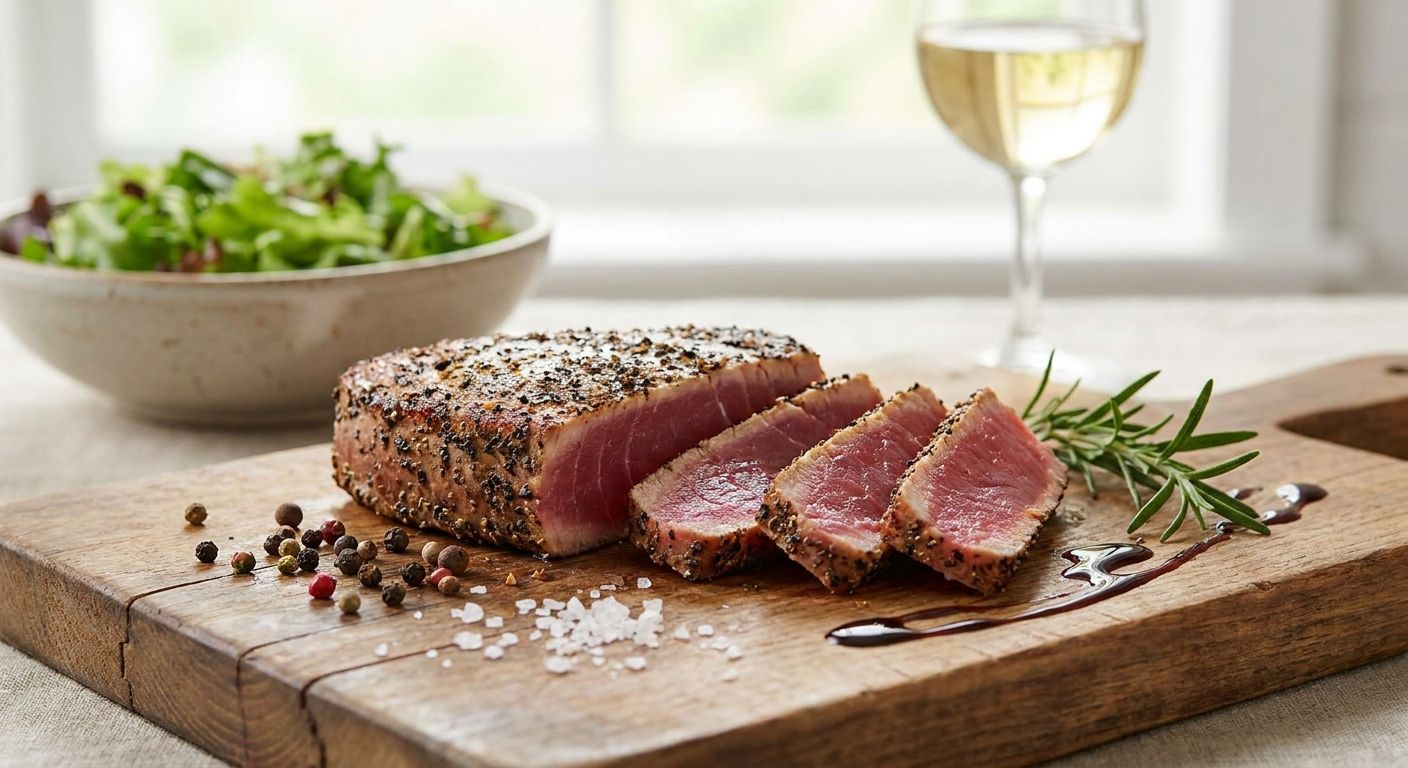


Steak au poivre is a pan-seared steak crusted in coarsely cracked black peppercorns, then finished with a quick pan sauce built from the same skillet drippings. The steak sears 3 to 4 minutes per side in a screaming-hot cast-iron or stainless pan, and the sauce comes together in under 5 minutes with butter, minced shallot, and a splash of brandy or cognac. The step most recipes skip: the pepper has to be cracked coarse, not ground fine, or it scorches into bitter dust before the crust forms. Freshly cracked peppercorns from a mill like the PepperMate Traditional Pepper Mill hold their shape and oil in the pan, which is the whole reason this steak au poivre recipe tastes sharp instead of burnt.
- This steak au poivre recipe needs coarsely cracked peppercorns, not ground pepper, or the crust burns before the steak sears.
- A 1 to 1.5 inch thick strip steak or filet holds the crust best and sears 3-4 minutes per side.
- The pan sauce uses the same skillet: shallot, brandy or cognac, cream or stock, and butter.
- Rest the steak 5 minutes before slicing so the crust stays put instead of sliding off.
Why this matters
Most home cooks in 2026 default to pre-ground pepper from a shaker, and it ruins this dish before the pan even heats up. Ground pepper is dust-fine and it turns acrid the second it hits hot fat, which is the number one reason a homemade steak au poivre recipe tastes bitter instead of steakhouse-good.
Coarse cracking is not optional here. It's the entire technique. Get the grind right and the rest of the recipe is closer to a basic pan sear than a fussy French classic.
How do you make steak au poivre at home?
Here's the full method, start to finish, for two 8-10 ounce steaks:
- Pull the steaks 30 minutes before cooking so they come closer to room temperature and sear evenly.
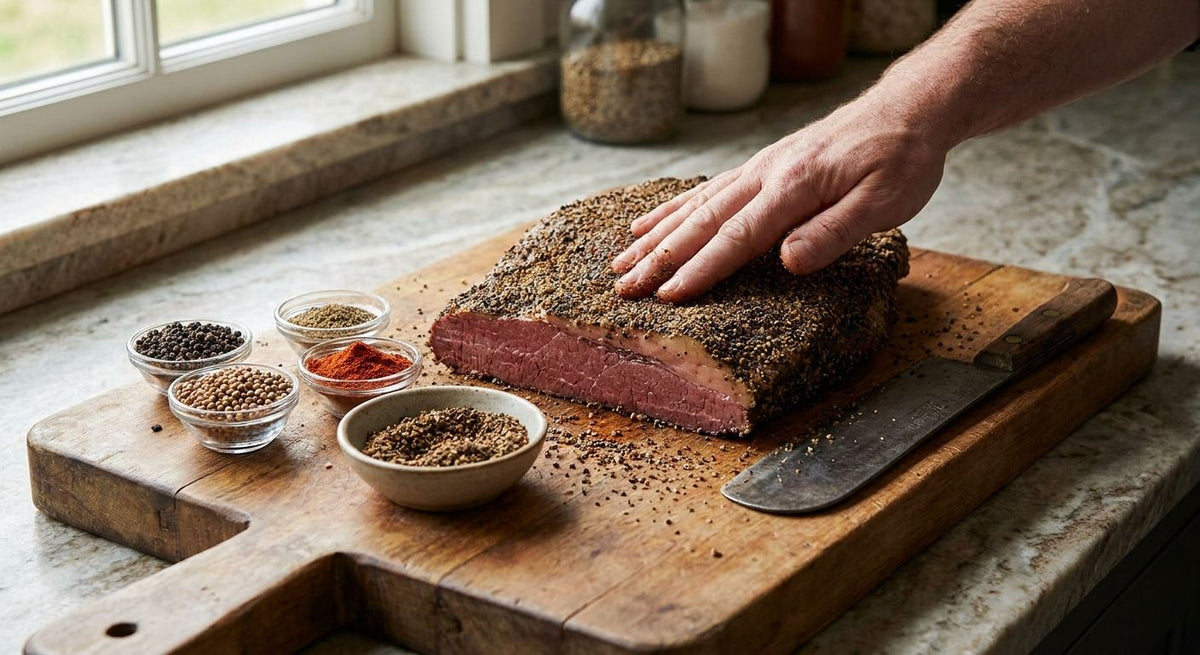
- Crack whole peppercorns coarse — a mill set to its coarsest setting, or peppercorns crushed under a pan, works. You want visible chunks, not powder.
- Press the cracked pepper into both sides of the steak, along with a light salt coat. Don't work it in past the surface — you want a crust, not a marinade.
- Heat a cast-iron or stainless pan until it's just short of smoking, add a neutral oil, and sear the steak 3-4 minutes per side for medium-rare, adjusting for thickness.
- Pull the steak and let it rest on a board for 5 minutes while the sauce comes together in the same pan.
- Build the sauce: deglaze with brandy or cognac (off heat first, then back on), scrape up the fond, add minced shallot, then cream or beef stock, then a knob of butter whisked in at the end.
- Spoon the sauce over the sliced steak and serve immediately — the sauce doesn't hold well once the butter separates.
The whole process takes about 20 minutes once the pan is hot, which is why steak au poivre shows up on 2026 weeknight dinner rotations as often as it shows up on date-night menus.
Which cut of steak works best for steak au poivre?
A New York strip or filet mignon, 1 to 1.5 inches thick, wins for steak au poivre — thick enough to hold a sear without overcooking the center while the crust develops. Ribeye works too, but its higher fat content means more flare-up in a hot pan, so watch it closer. Thin cuts under an inch don't give the crust time to set before the interior overcooks — skip those for this recipe.
| Cut | Thickness | Best for | Verdict |
|---|---|---|---|
| New York strip | 1-1.5 in | An even crust across a flat surface | Buy |
| Filet mignon | 1.5 in | Tender center, classic bistro plating | Buy |
| Ribeye | 1.25-1.5 in | Richer flavor, needs closer heat control | Hold |
| Sirloin under 1 in | Under 1 in | Fast weeknight sear, weak crust | Skip |
Why the pepper crust varies from kitchen to kitchen
A steak au poivre crust turns out anywhere from a light, snappy coating to a scorched, bitter shell. The difference comes down to a handful of factors:
- Grind size — coarse cracks hold their crunch; fine grinds burn before the steak finishes searing.
- Peppercorn freshness — older, dried-out peppercorns crack into smaller fragments and lose aromatic oil, which mutes the crust.
- Pan heat — a pan that isn't hot enough steams the pepper instead of toasting it, leaving a soggy coating.
- Steak thickness — thinner steaks finish cooking before the crust sets into the surface.
- Resting time — skipping the 5-minute rest lets juices push the crust off when you slice.
- How much pepper you press on — too light and it vanishes into the sear; too heavy and it goes overpowering rather than aromatic.
“If the pepper crust turns to dust instead of chunky flecks, the mill is grinding too fine for a sear.”
Do you need cognac for steak au poivre?
No — cognac adds a caramelized-fruit note, but brandy or a dry red wine work as substitutes. Skip the alcohol entirely and use beef stock if you're cooking for kids or avoiding alcohol; the sauce loses some depth but still coats the steak fine. The pepper crust defines this dish, not the liquor in the sauce.
Can you make steak au poivre without a pepper mill?
Yes, but a mill makes the coarse crack far easier to control than a knife or the bottom of a pan. Whole black peppercorns cracked on a mill's coarsest setting give you the even, chunky texture the crust needs — pre-cracked pepper from a jar tends to be uneven, mixing dust and whole corns in the same scoop. If a steak au poivre recipe is going into your regular 2026 rotation, a dedicated mill takes the guesswork out every time.
For more on grind size and why it matters this much, the guide on cracked black pepper for the perfect steak crust covers the exact setting for a steakhouse-style crust versus a lighter coating.
What sauce goes with steak au poivre?
The classic pan sauce uses shallot, cognac or brandy, cream or beef stock, and butter whisked in at the end for gloss. A lighter version skips the cream and finishes with stock and butter alone for a thinner, more savory result. Either way, the sauce gets built in the pan the steak seared in — that fond is where the flavor lives.
Is steak au poivre spicy?
Steak au poivre is peppery, not chili-spicy — the heat comes from black pepper's sharp, warm bite, not capsaicin. Anyone sensitive to black pepper might find a heavy crust intense, but it's nowhere near a chili-crusted dish. Pressing on less pepper, or using a coarser crack that delivers flavor in fewer bites, dials the intensity down without changing the recipe.
FAQ
What is steak au poivre?
Steak au poivre is a pan-seared steak coated in coarsely cracked black peppercorns and finished with a pan sauce of brandy or cognac, shallot, and butter. It is a French bistro classic that works as a 20-minute home dinner in 2026.
What is the best cut of steak for a steak au poivre recipe?
A New York strip or filet mignon, 1 to 1.5 inches thick, works best for steak au poivre. The thickness lets the crust set without overcooking the center.
How long do you cook steak au poivre?
Steak au poivre sears 3 to 4 minutes per side for medium-rare, then rests 5 minutes before slicing. Active cooking time runs about 10 minutes including the sauce.
Do you need a pepper mill for steak au poivre?
A pepper mill is not strictly required, but it is the easiest way to get an even, coarse crack on whole peppercorns. Pre-cracked pepper from a jar tends to be uneven, mixing dust with whole corns.
Can you make steak au poivre without cognac?
Yes, brandy, dry red wine, or beef stock all substitute for cognac in the pan sauce. The sauce loses some depth without alcohol but still coats the steak fine.
Is steak au poivre spicy or just peppery?
Steak au poivre is peppery from black pepper's warm bite, not chili-spicy. Using less pepper or a coarser crack lowers the intensity without changing the recipe.
What grind size works best for steak au poivre?
Coarsely cracked whole peppercorns, at a mill's coarsest setting, work best for steak au poivre. Fine-ground pepper burns bitter before the steak finishes searing.
What sauce goes with steak au poivre?
The classic pan sauce uses shallot, cognac or brandy, cream or stock, and butter whisked in at the end. It gets built in the same pan the steak seared in.
One last thing
The crust fails more often from pan temperature than from technique. A pan that hasn't fully preheated steams the cracked pepper instead of toasting it, and no amount of careful pressing fixes a soggy crust after the fact. Get the pan hot enough that the oil shimmers before the steak goes in, and the rest of this steak au poivre recipe takes care of itself. That single fix separates a 2026 kitchen-table steak from a bistro one.