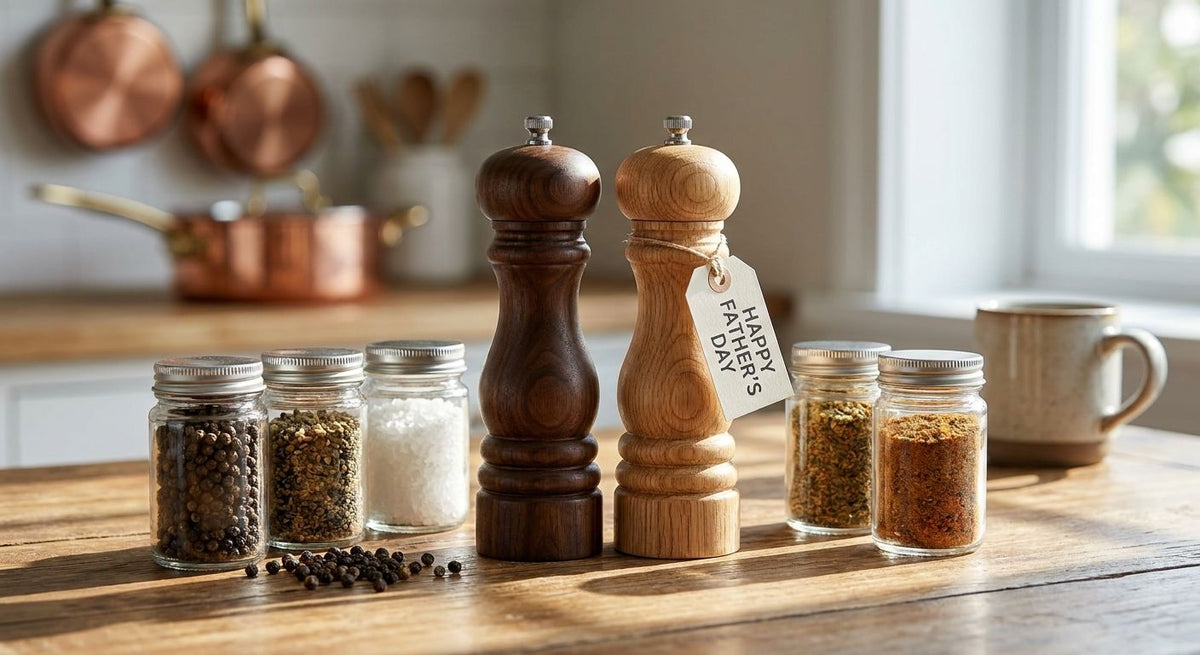


A chef's pepper mill has one job during service: put fresh cracked pepper on the plate in one motion, every single time, for years, without babysitting. This guide breaks down what separates a pepper mill for chefs from a countertop gadget and names the specific mills worth buying in 2026.
- PepperMate Traditional Pepper Mill is the pepper mill for chefs who need one-hand grinding through a full shift — Buy.
- Culinary students get more value from the PepperMate Traditional Salt and Pepper Mill Bundle than buying two separate mills.
- Skip acrylic mills with plastic gears — they strip under daily line use inside a semester.
- Keep a replacement tray on hand; the ceramic grinding mechanism outlasts the tray it sits in.
- A mill under 3 ounces of pepper capacity means refilling mid-service, which is a service killer.
Why this matters
A home cook grinds pepper a few times a week. A line cook or culinary student grinds it dozens of times a shift, often one-handed while plating, stirring, or holding a pan. The PepperMate Traditional Pepper Mill is built around a ratchet-style ceramic grinder specifically because that mechanism doesn't need a full wrist twist to produce a fine, even grind.
Most pepper mills sold to home cooks are engineered for occasional use: pretty, breakable, and slow. A pepper mill for chefs and culinary students needs to survive being dropped on stainless steel, refilled weekly, and passed between hands in a shared kitchen without losing grind consistency. That's a different design brief than what sits on a dinner table twice a year.
Who this is for
This guide is for working line cooks, culinary students building a knife-roll kit, and instructors outfitting a teaching kitchen. If you're grinding pepper for one household dinner a week, you don't need this level of durability. If you're grinding pepper across four dinner services a week or a full semester of lab classes, the mill you pick determines whether you're troubleshooting a jammed mechanism in week six or still grinding clean in year three.
What to look for in a pepper mill for chefs
Grind consistency across settings
A chef needs the same grind on a Tuesday brunch service and a Saturday dinner rush. Mills with a coarse ceramic grinding mechanism hold their calibration far longer than mills with stamped metal gears, which wear unevenly and drift toward coarse over months of use.
One-handed operation speed
During service, a mill that requires two hands to twist is a mill that gets skipped. A ratchet-action top that grinds with a single push-pull motion keeps pepper moving without stopping the plate.
Durability under daily use
Culinary students and line cooks drop things. A mill built with a solid acrylic body and a reinforced ceramic core survives counter drops that would crack a glass or thin-wood mill. If a pepper mill needs two hands and careful handling to adjust the grind mid-service, it doesn't belong on a chef's station.
Capacity and refill speed
A mill that holds less than 3 ounces of peppercorns runs dry mid-shift. Look for a mill with a clear or wide-mouth chamber that refills in under 15 seconds without disassembly.
Cost and availability of replacement parts
A mill in daily use for 3-5 years will eventually need a new tray or top, not a new mechanism. Mills sold with $2.99-$3.00 replacement parts extend the life of the whole unit for a fraction of buying a new mill.
Ease of cleaning
Shared teaching kitchens and commercial stations need mills that wipe down fast and don't trap oil residue in seams. Smooth acrylic bodies with sealed grinding chambers clean faster than wood mills, which absorb oil and odor over time.
Top picks for chefs and culinary students in 2026
The workhorse pick: PepperMate Traditional Pepper Mill (Black) This is the PepperMate Traditional Pepper Mill that shows up in working kitchens because the ceramic grinding mechanism is rated for years of daily use, priced at $39.99. The ratchet top grinds one-handed, which matters more during a rush than any spec sheet number. Buy for anyone grinding pepper daily.
The culinary school starter kit: PepperMate Traditional Salt and Pepper Mill Bundle Culinary students building a full kit need salt and pepper covered in one purchase. The bundle pairs two matched mills at $79.99, which runs cheaper than buying the pepper mill and a separate salt mill individually. Buy for students and instructors outfitting multiple stations at once.
The plating pick: PepperMate Traditional Pepper Mill (White) Same ceramic mechanism, same $39.99 price, but the white body shows less residue on an open-kitchen pass where guests can see the equipment. It's a cosmetic call, not a performance upgrade. Consider it if your station is visible to diners; otherwise stick with the black version.
The maintenance pick: Traditional Pepper Mill Replacement Tray At $2.99, a replacement tray keeps a three-year-old mill looking and functioning like new instead of forcing a full replacement. Buy this only if you already own a PepperMate mill and the tray is scratched or cracked; Skip it if you don't own the base unit yet.


What to avoid
- Glass-body mills marketed as "decorative." They look sharp on a countertop but crack the first time they hit a stainless prep table, which happens constantly in a working kitchen.
- Mills with a fixed, non-adjustable grind. Chefs need coarse for a steak crust and fine for a vinaigrette from the same tool; a fixed mechanism forces you to own two mills for one job.
- Ultra-cheap mills under $15 with plastic internal gears. They grind fine for the first few weeks, then the gears strip and the grind turns inconsistent, which is worse than a bad mill from day one because you don't notice the drift until the dish is already out.
Verdict comparison
| Pick | Grind mechanism | One-hand use | Refill time | Price | Verdict |
|---|---|---|---|---|---|
| PepperMate Traditional Pepper Mill (Black) | Ceramic ratchet | Yes | Under 15 sec | $39.99 | Buy |
| Salt and Pepper Mill Bundle | Ceramic ratchet x2 | Yes | Under 15 sec | $79.99 | Buy |
| Traditional Pepper Mill (White) | Ceramic ratchet | Yes | Under 15 sec | $39.99 | Consider |
| Replacement Tray (accessory) | N/A | N/A | N/A | $2.99 | Consider (owners only) |
FAQ
What's the best pepper mill for chefs in 2026?
The PepperMate Traditional Pepper Mill is the best pepper mill for chefs in 2026 because its ceramic ratchet mechanism grinds one-handed and holds calibration through daily commercial use. It costs $39.99 and comes in five color options for different station setups.
Is a ceramic grinder better than steel for a chef's station?
Yes, ceramic grinding mechanisms hold their edge and grind consistency longer than stamped steel gears under daily use. Steel gears wear unevenly over months of service, which drifts the grind toward coarse regardless of the setting.
How long should a professional pepper mill last?
A well-built pepper mill with a ceramic mechanism should last 3-5 years or longer under daily kitchen use. Replacing a $2.99 tray or top when it cracks extends that lifespan without buying a whole new mill.
Can culinary students use the same pepper mill as working chefs?
Yes, the same mills used on commercial line stations work for culinary school labs and knife-roll kits. A bundle that pairs a salt and pepper mill covers both needs in one purchase for students building a full kit.
How much should a pepper mill for professional use cost?
Expect to pay $35 to $80 for a pepper mill built for daily commercial use, depending on whether it's sold alone or bundled with a salt mill. Mills under $15 with plastic gears typically fail within weeks of daily grinding.
Do restaurants need electric or manual pepper mills?
Most working kitchens still prefer manual mills because they don't need batteries or charging and grind faster in a one-handed motion during service. Electric mills add convenience for tableside service but aren't standard on the line.
How do you clean a pepper mill used in a commercial kitchen?
Wipe the exterior body with a damp cloth after each shift and avoid submerging the grinding mechanism in water. A sealed acrylic body cleans faster and traps less oil residue than a wood-bodied mill.
What's the difference between a pepper mill and a pepper grinder for chefs?
The terms are used interchangeably in most kitchens, referring to the same manual tool that cracks whole peppercorns on demand. The difference that matters for chefs is the grinding mechanism inside — ceramic versus steel — not the name on the label.
One last thing
The part that fails first on a heavily used pepper mill usually isn't the grinding mechanism at all — it's the tray or top that takes the daily counter drops. Budgeting $2.99 for a replacement tray once a year is cheaper than replacing a $39.99 mill every 18 months, and it's the detail most kitchens skip until the mill is already cracked.