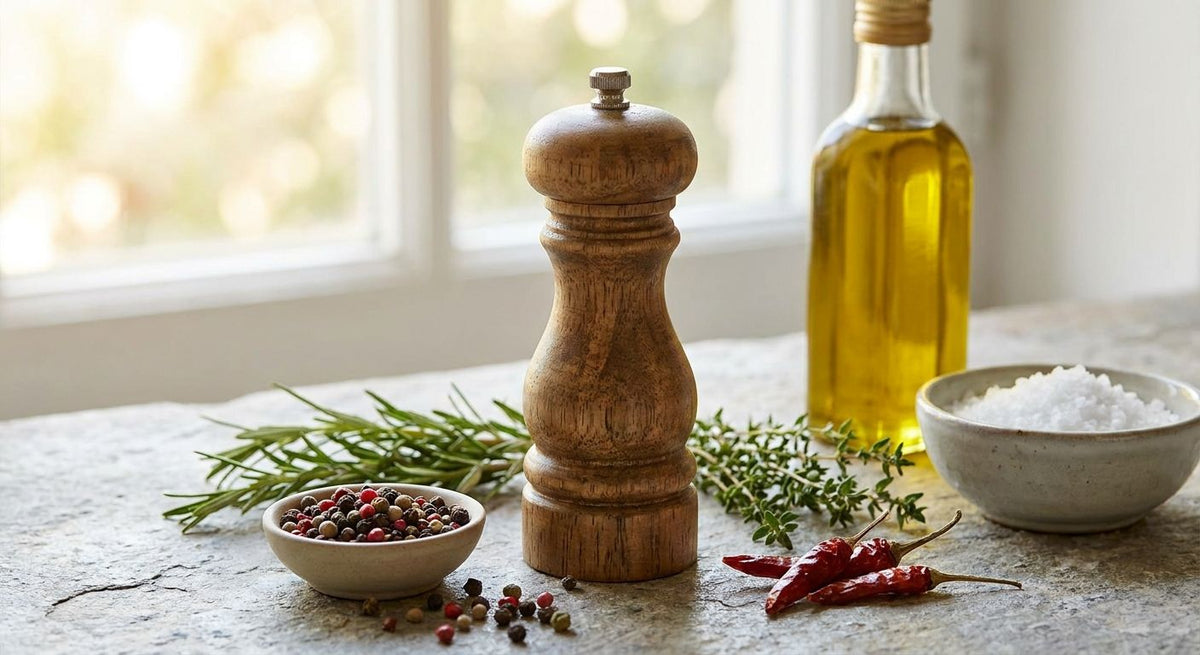


A pepper mill for vegan and plant-based cooking is a countertop grinder that mills whole peppercorns fresh over vegetables, grains, legumes, and dressings, built to carry flavor in meals that skip butter, cream, or meat drippings for richness. Plant-based cooking asks more of a pepper mill because there's no animal fat rounding out the plate, so grind consistency and freshness do more of the work than they would in a typical kitchen.
- A pepper mill for vegan cooking needs to grind fine for vinaigrettes and coarse for roasted vegetable trays without swapping tools.
- PepperMate's Traditional Pepper Mill is the daily pick for plant-based kitchens leaning on grain bowls, legumes, and dressings for flavor.
- Pre-ground pepper loses its oils fast; whole peppercorns milled fresh hold up through a week of batch cooking.
- Most pepper mills are already vegan-safe, built from wood, ceramic, acrylic, or stainless steel, not bone or horn.
Why fresh pepper matters more when there's no meat fat on the plate
Vegan and plant-based cooking relies on a smaller set of flavor tools than a kitchen built around meat and dairy. Salt, acid, fresh herbs, and pepper carry more of the load, and pepper is the one you're reaching for at nearly every stage: seasoning a pan of roasted vegetables, finishing a lentil soup, or building a vinaigrette from scratch.
That's a different job than seasoning a steak. A Traditional Pepper Mill that grinds evenly at both ends of the dial earns its spot on a plant-based counter because it gets used across more dishes per week, not fewer. Grain bowls, roasted cauliflower, chickpea stews, and salad dressings all want pepper, and they all want it milled a little differently.
Batch cooking is common in plant-based kitchens too — a Sunday session that fills a week of lunches leans on one mill doing a lot of grinding in a short window, which is where a mill that clogs under repeated use becomes a real problem instead of a minor annoyance.
How to pick and use a pepper mill for vegan cooking
Match your grind setting to the dish, not just the recipe
One coarseness setting does not serve a vinaigrette and a roasted vegetable tray equally well. Adjust before you grind, not after you taste.
- Fine grind for vinaigrettes and dressings so the pepper disperses instead of settling at the bottom of the jar
- Medium grind for grain bowls and lentil dishes, where pepper should blend in rather than dominate a bite
- Coarse grind for roasted vegetable trays and root vegetables, where the peppercorn holds up under high oven heat
- Fine grind for tofu and tempeh marinades so the pepper incorporates into the liquid base
- Coarse cracked pepper as a finishing touch on noodle bowls and soups for visible texture
Build the mill into your batch cooking routine
Plant-based meal prep tends to happen in one long session rather than small daily bursts, so the mill needs to keep pace.
- Grind directly into bulk containers while grains and legumes are still warm, so the pepper's oils release into the dish
- Keep one mill near the stove for cooking and a second near the table for finishing salads and bowls
- Season before freezing prepped meals rather than after reheating, since pepper's flavor fades less when it's milled into a warm dish
- Choose a mill that refills in seconds rather than one that needs disassembly, since a weekly prep session means frequent top-offs
Choose a mill made from vegan-safe materials
Most pepper mills already fit a plant-based kitchen without any extra research, but it's worth knowing what to check.
- Wood, acrylic, ceramic, and stainless steel grinding mechanisms are standard and contain no animal-derived material
- Avoid the rare mill marketed with a bone or horn handle — uncommon, but worth a glance at the material listing before buying
- Ceramic grinding mechanisms hold up better than metal ones when splashed with acidic vinaigrette or citrus juice
- A sealed, adjustable top keeps peppercorns dry and free of contact with oils or marinades sitting nearby on the counter
Set up a catch tray for mess-free grinding
Grinding straight onto a salad or grain bowl at the table works better with a tray built into the mill than with a shaker-style top that spills on the counter.
- A mill with a built-in tray catches drips when you're seasoning a bowl mid-meal, not just at the stove
- A tray reduces waste when you're grinding a heavier dose onto a pot of lentils or a full roasting pan
- Replaceable trays and tops mean a heavily used mill doesn't need full replacement when one part wears down
Stock whole peppercorns and pair them with complementary blends
A mill is only as good as what's loaded into it, and plant-based cooking benefits from having more than one option on hand.
- Keep a steady supply of whole black peppercorns loaded for daily grinding rather than buying pre-ground jars
- Add a garlic and salt blend to the rotation for roasted vegetable trays that need three flavors without extra prep steps
- Rotate in a second mill loaded with a different blend if you season heavily across several dishes a week
- Buy peppercorns in quantities you'll actually use within a few months rather than a bulk supply that sits and dulls
Store peppercorns for maximum freshness between grinds
Whole peppercorns hold their flavor far longer than ground pepper, but only if they're stored right.
- Keep peppercorns in a sealed container away from stove heat and direct light
- Never mix ground pepper into a hopper meant for whole peppercorns — the two grind at different rates and clog the mechanism
- Buy whole, not pre-cracked, peppercorns for the mill itself; cracked pepper is a finishing product, not a refill
- Check peppercorns for moisture before loading a full hopper, since humidity is the fastest way to dull a fresh batch
Which pepper mill option fits a plant-based kitchen
| Option | Best for | Key limitation |
|---|---|---|
| PepperMate Traditional Pepper Mill | Everyday plant-based cooking — one-handed grinding onto grain bowls and roasted vegetables | Manual grinding takes a few extra seconds compared to an electric mill |
| PepperMate Traditional Salt and Pepper Mill Bundle | Batch meal-prep sessions that need salt and pepper at once | A two-mill bundle takes more counter space than a single mill |
| Whole Black Peppercorns | Refilling any mill for daily vegan cooking | A 1-pound bag needs a mill already on hand — it's a refill, not a standalone tool |
| Coarse Salt, Pepper & Garlic Blend | Roasted vegetable trays that need three flavors without separate seasoning steps | Fixed blend ratio — you can't isolate pepper alone from the mix |
Verdict: the PepperMate Traditional Pepper Mill is the right daily pick for vegan and plant-based cooking in 2026 because it handles the fine-to-coarse range that grain bowls, dressings, and roasted vegetables all demand from one tool.


Common mistakes vegan and plant-based cooks make with a pepper mill
- Relying on pre-ground pepper because it seems close enough. Plant-based dishes have no meat fat to mask flat, stale pepper — the flavor gap shows up fast in a simple lentil soup or grain bowl.
- Using one grind setting for everything. A vinaigrette and a roasted vegetable tray need different coarseness; running both through a fine setting leaves the roasted dish under-seasoned.
- Overloading a mill during a big batch-cooking session. A mill that clogs halfway through a Sunday prep session isn't built for the volume plant-based meal prep actually requires.
- Storing peppercorns next to the stove. Heat and steam dull the oils that make fresh-milled pepper worth the extra step over a shaker.
- Skipping the garlic-salt blend for roasted vegetables. A pepper mill alone can't deliver the three-flavor hit that a roasted vegetable tray benefits from — pairing it with a blend saves a separate seasoning step.
FAQ
What's the best pepper mill for vegan and plant-based cooking?
The PepperMate Traditional Pepper Mill is the best fit for most plant-based kitchens in 2026 because it adjusts from fine to coarse for both dressings and roasted vegetables. It's also a manual mill, so it works without power or batteries during a busy meal-prep session.
Are pepper mills vegan?
Yes, nearly all pepper mills are vegan by default, built from wood, ceramic, acrylic, or stainless steel grinding mechanisms. The rare exception is a mill marketed with a bone or horn handle, which is uncommon and easy to spot on the product listing.
Is fresh-ground pepper better than pre-ground for plant-based cooking?
Fresh-ground pepper holds more of its natural oils and aroma than pre-ground pepper, which matters more in plant-based dishes that don't have meat fat to carry flavor. Pre-ground pepper loses potency within weeks of grinding, while whole peppercorns keep their character much longer in a sealed container.
What grind setting works best for salad dressings and vinaigrettes?
A fine grind setting works best for vinaigrettes because it disperses through the oil and vinegar instead of settling at the bottom of the jar. Coarse pepper is better saved for finishing a dish, not blending into a dressing base.
Can one pepper mill handle both roasted vegetables and dressings?
Yes, an adjustable pepper mill like the PepperMate Traditional Pepper Mill handles both jobs from a single dial, switching from fine for dressings to coarse for roasted vegetable trays. A mill without an adjustable setting forces you to keep two tools on hand instead.
How should peppercorns be stored for plant-based meal prep?
Peppercorns should be stored in a sealed container away from stove heat and direct light, and bought in quantities used within a few months. Whole peppercorns should never be mixed with pre-cracked pepper in the same hopper, since the two grind at different rates.
Do I need a salt mill along with a pepper mill for vegan cooking?
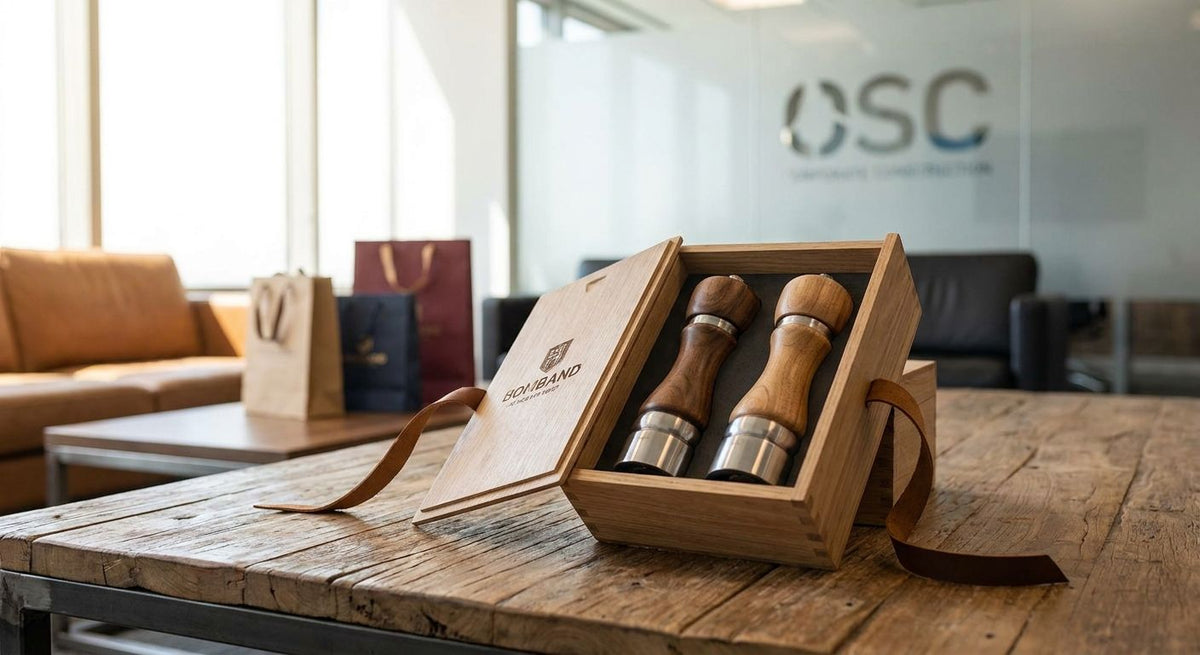
A salt mill isn't required, but it pairs well with a pepper mill for batch cooking sessions that need both seasonings at once. The PepperMate Traditional Salt and Pepper Mill Bundle covers both in one purchase for cooks who season grains and vegetables in large batches.
What's a good pre-made blend for roasted vegetables?
A coarse salt, pepper, and garlic blend covers three flavors in one grind, which saves a step when seasoning a full tray of roasted vegetables. It works alongside a standalone pepper mill rather than replacing it, since the blend has a fixed ratio.
One last thing
The detail most plant-based cooks miss: pepper does more flavor work in a vegan dish than in almost any other kitchen, precisely because it isn't competing with butter or pan drippings. A mill that grinds unevenly costs you more in a lentil stew than it ever would in a steak dinner — that's the actual argument for spending on grind consistency over a shaker jar in 2026.