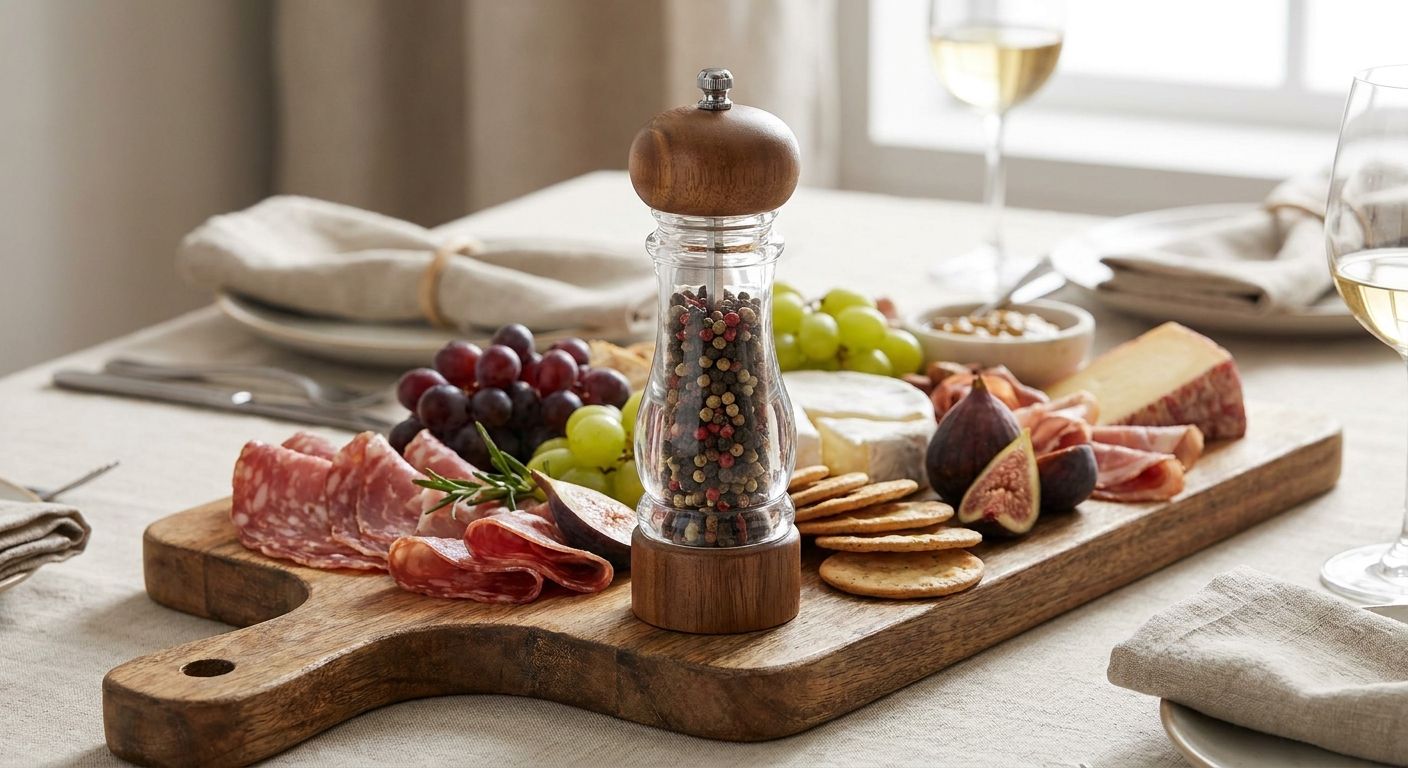


A pepper mill for Italian pasta and pizza night is a tabletop grinder built to crack peppercorns coarse right before the dish hits the table, matching the direct, few-ingredient style of Italian cooking where pepper carries real weight instead of sitting in the background.
- PepperMate Traditional Pepper Mill wins for Italian pasta and pizza night: one-handed grip, coarse output over a hot pan.
- A pepper mill for Italian cooking needs a coarse-first setting - fine dust scorches and turns bitter on a 2026 pizza stone.
- Whole black peppercorns hold aroma for months; pre-ground pepper flattens out within weeks of opening the can.
- Cacio e pepe runs on three ingredients, so the pepper mill you use is doing as much work as the cheese.
Why this matters for Italian pasta and pizza night
Italian home cooking leans on short ingredient lists. Cacio e pepe is pasta, pecorino, and pepper - three components, no room for a dull grinder. Carbonara, amatriciana, and a plain margherita pizza all lean the same way: the sauce is simple, so the pepper has to do real work.
That changes what a pepper mill needs to do in an Italian kitchen in 2026. It needs a coarse setting that survives contact with a hot pan of pasta water, a grip that works one-handed while the other hand tosses the noodles, and a hopper you can refill without hunting for a funnel mid-dinner. A mill built for delicate table seasoning at a steakhouse is not built for finishing a pot of cacio e pepe over direct heat.
Choose a coarse-first grind mechanism
Italian sauces built on pepper - cacio e pepe, carbonara, amatriciana - want a coarse, cracked texture that clings to starchy pasta water instead of vanishing into fine dust.
- Look for a mill with a wide adjustment range, not a single fixed setting
- Ceramic grinding mechanisms hold an edge longer than metal ones exposed to steam
- Test the coarse end before you buy: it should produce visible flecks, not powder
- Avoid mills marketed mainly for fine table seasoning - they underperform on pasta night
Load whole black peppercorns, not pre-ground pepper
Whole whole black peppercorns keep their essential oils sealed until the moment they're cracked, which is the entire argument for owning a mill in the first place.
- Buy peppercorns in a 1 lb bag if you cook Italian food weekly - it lasts longer than small jars
- Store peppercorns in a sealed, dark container away from the stove's heat
- Skip pre-cracked or "table grind" pepper - it has already lost most of its aroma
- Smell the peppercorns before loading; stale ones smell flat instead of sharp
Match grind size to the dish
Cacio e pepe wants a coarser crack than a delicate seafood pasta, and pizza wants something in between - coarse enough to see, fine enough to distribute evenly across a slice.
- Set the mill coarser for cheese-heavy sauces that need texture to grab onto
- Dial it finer for oil-based sauces like aglio e olio, where clumps stand out
- For pizza finished at high heat (home ovens typically run 450-500°F), grind after the bake, not before, so the pepper doesn't scorch
- Keep a second, cheaper mill on hand if your household disagrees on coarseness
Season pasta water and finish the plate separately
Most Italian cooks under-season the water and over-season the plate. A pepper mill lets you fix that in two passes instead of guessing once.
- Add a modest crack of pepper to the pasta water alongside the salt
- Reserve the bulk of the grinding for the final toss with butter, oil, or pecorino
- Grind directly over the pan while it's off the heat - direct flame dulls the aroma fast
- Finish plated pasta with one more pass at the table for guests who want more
Serve pepper tableside during pizza night
Pizza night works best when the pepper mill travels around the table instead of staying in the kitchen, the same way a bottle does. Matching a coarse pepper crack to a rustic red follows the same logic behind picking Italian wines for pasta night - bold, direct flavors need bold, direct pairings, not something delicate that gets lost.
- Set the mill on the table before the first pie comes out, not after
- Let each guest grind their own portion rather than pre-seasoning every slice
- Pair a coarser grind with heavier toppings (sausage, mushroom) and a lighter one with plain margherita
- Keep a backup mill loaded if you're hosting more than four people
Clean and store the mill between Italian dinners
Tomato splatter and cheese dust find their way into every mechanism during a busy Italian dinner rotation, and buildup is what eventually slows a mill's grind.
- Wipe the exterior after every use, especially near the hopper opening
- Never submerge a wood or acrylic body mill in water
- Empty leftover peppercorns if you won't cook Italian food again for a few weeks
- Check the grind mechanism seasonally for dust buildup that dulls the crack


Comparing mill types for Italian cooking
| Mill type | Best for | Key limitation |
|---|---|---|
| Coarse-adjustable tabletop mill | Cacio e pepe, carbonara, pizza night table service | Needs occasional cleaning near the hopper after saucy meals |
| Ceramic burr mill | Households that grind daily and want a durable mechanism | Ceramic can chip if dropped on a hard tile floor |
| Fine-grind restaurant shaker mill | Delicate dishes needing dust-fine pepper | Poor fit for coarse pasta and pizza applications |
| Electric pepper grinder | Hands-free grinding for larger dinner parties | Battery-dependent; less control over exact coarseness |
| Pre-ground pepper in a shaker | Emergency backup with zero setup | Loses aroma within weeks and can't match fresh-cracked flavor |
A coarse-adjustable tabletop mill is the right call for most Italian pasta and pizza night cooking in 2026 - it's the only option on this list built for both the stovetop and the table.
Common mistakes Italian home cooks make
- Grinding pepper into boiling pasta water and walking away - the aroma cooks off before it ever reaches the plate
- Using the same fine setting for pizza and cacio e pepe - the dishes need different textures, not one default grind
- Buying pre-ground pepper for convenience during a busy week - it undercuts the entire reason to own a mill
- Skipping the tableside pass at pizza night - guests season once at the kitchen counter and never touch the mill again
- Letting tomato sauce dry inside the hopper lid - it gums up the mechanism faster than plain dust ever would
FAQ
What is the best pepper mill for Italian cooking in 2026?
A coarse-adjustable tabletop mill like the PepperMate Traditional Pepper Mill is the best pepper mill for Italian cooking in 2026 because it handles both stovetop finishing and tableside pizza night service. Fine-grind restaurant mills underperform on cacio e pepe and carbonara, which need a visible crack, not dust.
Should I use whole peppercorns or pre-ground pepper for pasta?
Whole peppercorns hold their aroma far longer than pre-ground pepper, which flattens out within weeks of opening the container. Grind whole black peppercorns fresh over each dish for cacio e pepe, carbonara, and amatriciana.
Is a coarse or fine grind better for cacio e pepe?
Cacio e pepe wants a coarse grind so the pepper clings to the starchy pasta water instead of dissolving into dust. A fine grind gets lost in the sauce and leaves the dish under-seasoned.
When should I add pepper to pizza - before or after baking?
Grind pepper onto pizza after it comes out of a 450-500°F home oven, not before baking. Pepper ground before the bake scorches and turns bitter under high heat.
How much pepper should I add to pasta water?
Add a modest crack of pepper to the pasta water alongside the salt, then reserve most of the grinding for the final toss with butter, oil, or pecorino. Two lighter passes season more evenly than one heavy one.
Can I use the same pepper mill for pasta and grilled meats?
Yes - a coarse-adjustable mill works for both, since the same mechanism that cracks pepper for cacio e pepe can also finish a grilled steak. Just clean the hopper between saucy pasta dinners and drier grilling sessions.
Do ceramic pepper mills work well in Italian kitchens?
Ceramic grinding mechanisms hold their edge longer than metal ones exposed to steam from pasta water, making them a solid fit for a busy Italian kitchen. The tradeoff is that ceramic can chip if the mill is dropped on tile.
What's the difference between an Italian blend seasoning and a pepper mill?
An Italian blend seasoning is a pre-mixed spice combination meant for quick seasoning, while a pepper mill delivers fresh-cracked pepper on demand for dishes where pepper is the main flavor, like cacio e pepe. The two work together rather than replacing each other.
One last thing
Most pasta-night cooks set the mill to one coarseness and never touch the dial again - that single habit does more to flatten Italian cooking in 2026 than the brand of peppercorn in the hopper. Adjust the grind between the pasta water, the final toss, and the tableside pass, and the same bag of peppercorns will taste like three different seasonings across one dinner.