

A home spice drawer only works if the grinders in it earn their spot every single time you cook. This guide walks through building one that holds up in 2026 kitchens, from measuring the drawer to picking which mills actually deserve the space.
- Spice drawer essentials start with two grinders: a pepper mill and a salt mill, not six half-used jars.
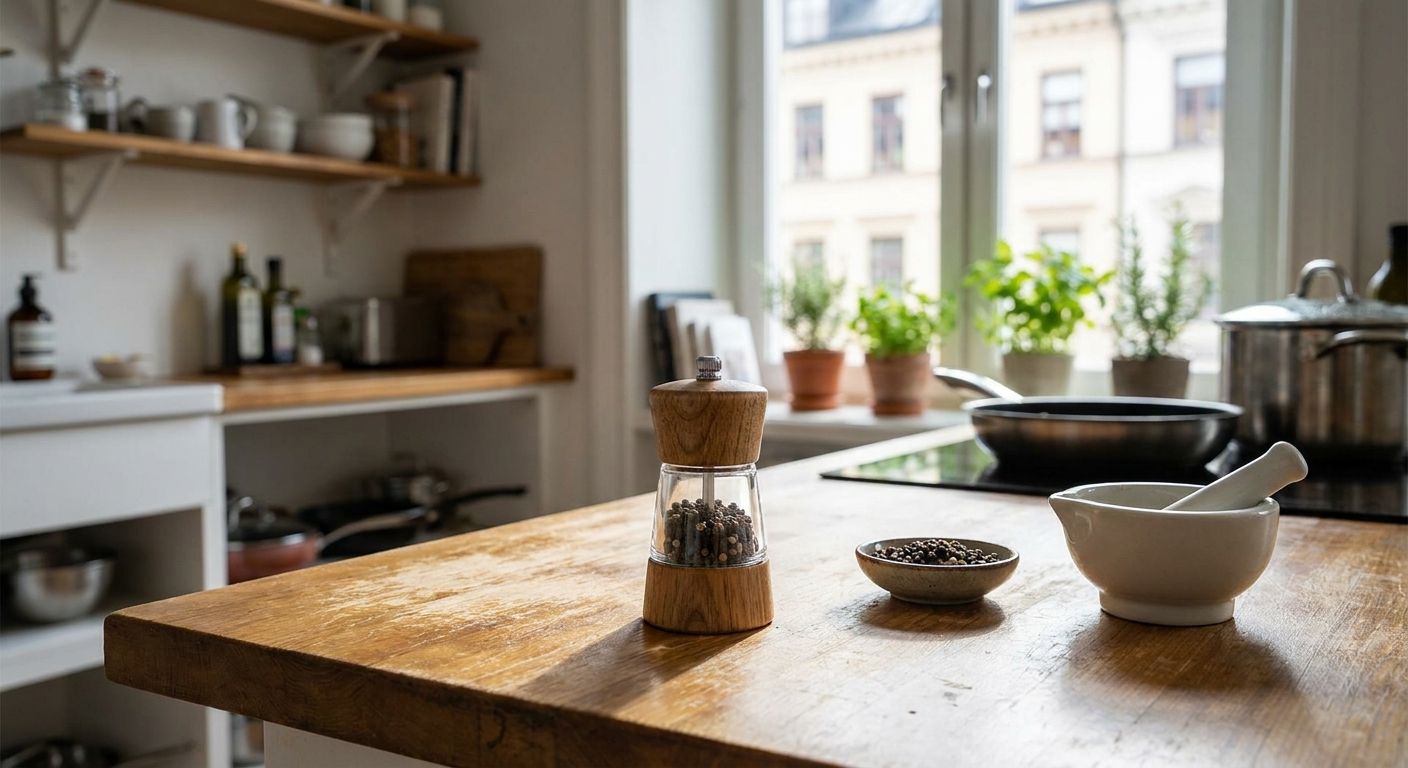
- The PepperMate Traditional Pepper Mill holds whole peppercorns and grinds one-handed, so it earns a permanent slot. Buy.
- Sort spices by how often you reach for them in a week, not by how the drawer looks.
- Whole peppercorns and unrefined salt keep their flavor far longer than pre-ground jars once they're sealed properly.
- Recheck the drawer every 90 days in 2026 and pull anything that hasn't moved.
Why this matters
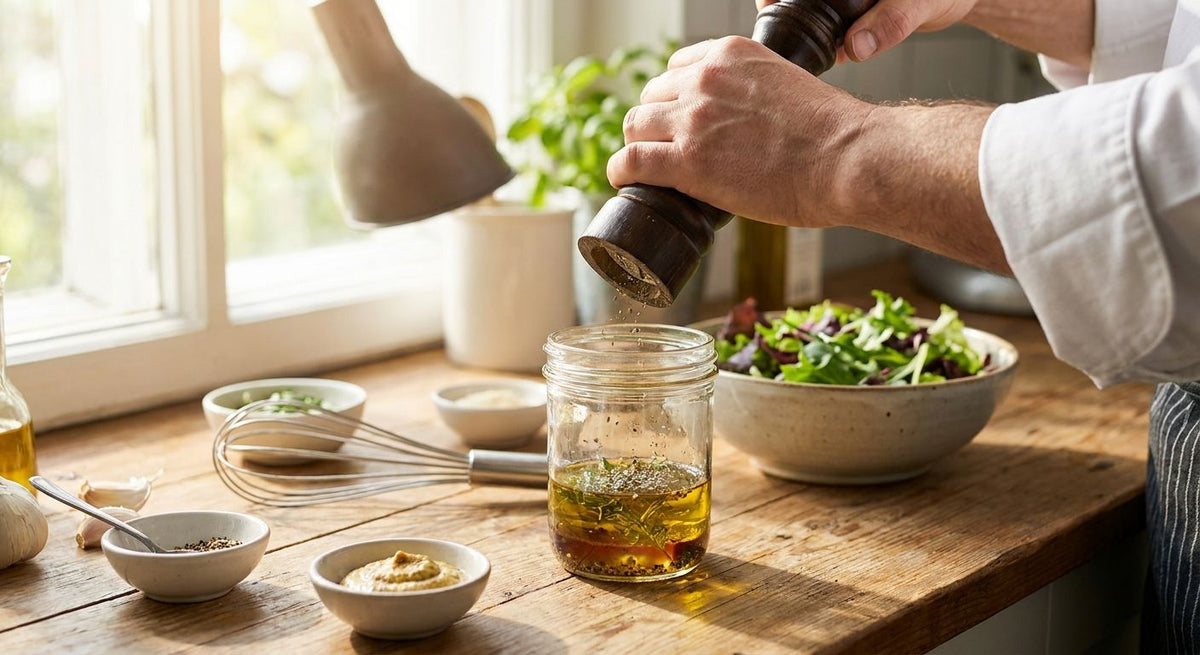
Most spice drawers fail for one reason: they get built once and never edited again. Six months later it's a drawer of jars nobody remembers buying, wedged next to a pepper shaker that stopped grinding anything fresh sometime last year. A working spice drawer is a small system, and the grinders are the moving parts that decide whether the system holds. The PepperMate Traditional Pepper Mill is worth starting with because it's the one tool in the drawer that gets touched at nearly every meal, so it has to grind cleanly and refill without a fight.
Get the grinder choice right and everything else in the drawer — jars, blends, backups — organizes itself around it. Get it wrong and you're back to a junk drawer with better lighting.
What You'll Need
- A drawer at least 2 to 3 inches deep, the standard depth for most kitchen spice inserts
- A pepper mill you'll actually use daily
- A salt mill or fine salt grinder to pair with it — the salt and pepper mill bundle covers both in one purchase
- Small glass or tin jars for loose ground spices, roughly 2 to 4 oz each
- A permanent marker or a sheet of adhesive labels
- Whole peppercorns and coarse salt to keep the mills stocked
- 20 to 30 minutes and an empty counter to sort everything onto
The Steps
1. Measure the drawer before you buy anything
Pull the drawer out and measure depth, width, and height with something actually inside it — a pepper mill standing upright is the tallest item most drawers will hold. Skipping this step is the single fastest way to end up with an organizer that doesn't close. Most standard pepper mills stand 5 to 7 inches tall, so if your drawer is under 4 inches deep, plan to lay mills on their side instead of upright.
Common mistake: buying a drawer insert online before measuring the actual drawer, then discovering it's a half-inch too tall.
2. Pick your two core grinders first
Every spice drawer needs exactly two non-negotiable grinders: one for pepper, one for salt. Everything else is a supporting cast. A wooden pepper mill with a real grind mechanism, not a shaker with pre-cracked pepper, is what separates a spice drawer that gets used from one that gets ignored. Set these two mills in the front-left corner of the drawer, the spot your hand reaches first without looking.
Expected outcome: the two grinders you use most become the fastest things to grab, every time.
3. Sort every remaining spice by how often you actually use it
Line up every jar and shaker you own on the counter and split them into three piles: weekly, monthly, rarely. Weekly spices go in the front row of the drawer. Monthly spices go in the back row. Rarely-used spices either move to a cabinet or get thrown out if they're more than a year old — ground spices lose most of their punch well before that mark.
Common mistake: keeping ten specialty blends in prime drawer real estate when you've opened three of them in the last year.
4. Jar and label anything that came in a paper packet
Paper spice packets tear, spill, and take up awkward space. Transfer loose spices into small matching jars, and label the lid, not just the side — when jars sit flat in a drawer, the lid is the only part you see. Use a consistent label style across the whole drawer; it takes an extra five minutes and it's the difference between a drawer that looks intentional and one that looks like a junk drawer with a lid on it.
Expected outcome: you can identify every spice in under two seconds without lifting a single jar.
5. Stock the mills with whole ingredients, not pre-ground backups
A pepper mill is only as good as what's inside it. Keep a small stash of whole peppercorns next to the mill so refilling takes seconds, and follow the same logic on the salt side with coarse, unrefined salt rather than fine table salt, which clogs most grinding mechanisms. For the specifics on keeping peppercorns potent between refills, the guide on how to store peppercorns for maximum freshness covers container choice and light exposure in more detail than fits here.
Common mistake: refilling a pepper mill with pre-ground pepper because it's what's on hand — it defeats the entire point of owning a mill.
6. Run the drawer through one full week before locking it in
Cook a normal week using only what's in the drawer. Note anything you had to leave the kitchen to grab, and anything that sat untouched all seven days. That's your real usage data, and it's more accurate than any guess you'd make sorting spices on a Sunday afternoon.
Expected outcome: a second, smaller reshuffle after week one that finishes the job the first sort started.
Troubleshooting
- Pepper mill grinds unevenly or stalls mid-turn. Peppercorns are usually too old or too moist — swap in a fresh batch and check that the mill's been stored somewhere dry.
- Salt clumps and jams the grinder. Fine table salt is the culprit almost every time. Switch to coarse or kosher-grind salt built for a mill mechanism.
- Drawer won't close with everything inside. You've likely got upright mills in a shallow drawer. Lay tall grinders on their side or move them to a countertop stand instead.
- Grind mechanism feels loose or stripped over time. This is normal wear after heavy daily use, not a sign to replace the whole mill. Check the repair or replace guide before buying a new one — most mills just need a replacement part.
- Labels smear or peel in a humid kitchen. Swap paper labels for a laminated or wipeable sticker; drawers near a stove or dishwasher run warmer and damper than most cabinets.
Tools and Resources
Beyond the two core grinders, a few extras round the drawer out: matching glass jars, a wipeable label set, and a small stock of backup peppercorns and coarse salt. If you want pre-built blends instead of assembling single spices one jar at a time, ready-made podi spice blends are worth a look for the same reason curated rub sets earn a spot in a spice drawer — they cut the sorting work down to one purchase instead of eight.


What To Do Next
Once the drawer holds steady for a month, the next upgrade is usually the mills themselves rather than the spices inside them — a mill that grinds unevenly after years of use is worth replacing before it drags the whole system down. Revisit the drawer every 90 days through the rest of 2026 and drop anything that's gone untouched; a spice drawer that never gets edited slowly turns back into the junk drawer it replaced.
FAQ
What are the essential grinders for a home spice drawer?
A pepper mill and a salt mill are the two non-negotiable grinders for spice drawer essentials in 2026. Everything else — jars, blends, backups — organizes around those two.
How deep does a drawer need to be for spice storage?
Most spice drawer inserts need at least 2 to 3 inches of depth to sit flat. Upright pepper mills usually stand 5 to 7 inches tall, so shallower drawers require laying mills on their side.
Is whole peppercorn better than pre-ground pepper for a spice drawer?
Whole peppercorns hold flavor far longer than pre-ground pepper once sealed properly, which is the entire reason a pepper mill earns drawer space. Pre-ground pepper defeats the purpose of owning a mill.
Why does my salt grinder keep clogging?
Fine table salt clogs most grinder mechanisms because the granules are too small and dense. Coarse or kosher-grind salt built for a mill runs smoothly instead.
How often should I reorganize a spice drawer?
Check the drawer every 90 days and remove anything that hasn't been used. A drawer that never gets edited slowly turns back into clutter regardless of how well it was sorted at the start.
Should I keep specialty spice blends in the front of the drawer?
No — front-row space belongs to whatever you reach for weekly. Specialty blends used monthly or less belong in the back row or a separate cabinet.
Do I need separate jars for every spice?
Yes, if the spice came in a paper packet. Small matching jars with labeled lids make everything identifiable in seconds once jars sit flat in a drawer.
What's the biggest mistake people make building a spice drawer?
Building it once and never revisiting it. The most useful spice drawers get a second reshuffle after a real week of cooking reveals what actually gets used.
One Last Thing
The drawer that works best a year from now probably won't look like the one you build this weekend, and that's fine — the whole point of sorting by weekly, monthly, and rarely is that the front row keeps changing as your cooking does. The only fixed part should be the pepper mill in the front-left corner.